Thoth and the teachers of Egypte

When you think about Egyptian teachers, you probably think about Thoth. Teachers have a close connection with Thoth, the god of wisdom. Thoth himself is sometimes considered a teacher. In the last centuries of ancient Egypt, the idea prevailed that Thoth had written down all the knowledge humanity needed in a book. What did the Egyptians mean by this? Were there people who knew this book?
Scribes
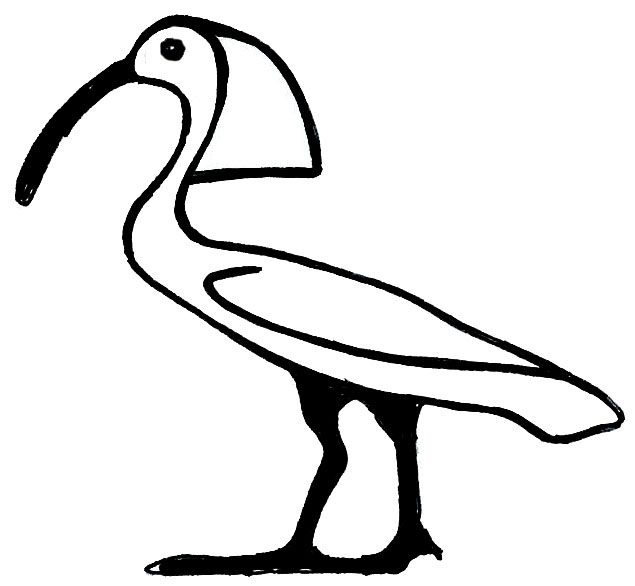
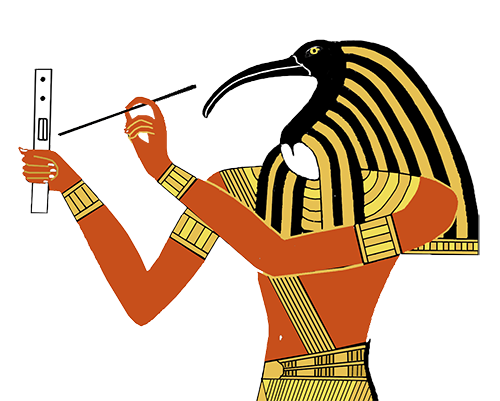
Thoth was beloved from the earliest times. Because the Egyptians were convinced that hieroglyphs possessed divine wisdom, the hieroglyphs were also dedicated to him. Thoth was therefore the patron saint of scribes.
By scribes, in this context, the Egyptians didn’t mean the officials who recorded mundane matters like the yield of the grain harvest or the contents of storerooms, but wise people. They were believed to have insight into the forces of nature and humanity. They wrote the wisdom texts, conceived the myths, and designed Egypt’s artwork.
Icons of Wisdom
Thoth is not a person. Thoth is the embodiment of wisdom and can only be expressed when someone has developed wisdom. Many Egyptians had Thoth in their name. Thutmose, for example (Thothmoses). His name means “Thoth is born.” It reflects the idea that one can develop wisdom and be like Thoth. Of course, this doesn’t necessarily mean that someone who has Thoth in their name is actually wise, but it indicates that the Egyptians considered this quality important.
Today, athletes, pop stars, and movie stars are icons for many people. In a country like Egypt, wise people were the inspiring role models. Great Sages with special qualities were admired for centuries. A text from the New Kingdom lists wise Egyptians who lived in a period many centuries before that time. Ptahhotep and Imhotep, for example. No one was equal to them, the text explains. [1] They lived in the Old Kingdom and were still very famous during the New Kingdom. Imhotep remained highly beloved even into the Greek era. For almost three thousand years!

Imhotep and Ptahhotep
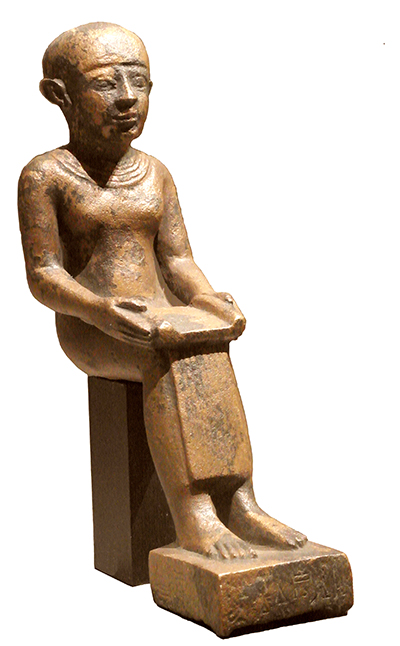
According to tradition, Imhotep came from a humble background. He was an architect, scientist, and physician. He built, among other things, the Step Pyramid of Djoser. He was known for his extraordinary insights and talents. His universal wisdom associated him with Thoth, and his knowledge of medicine made him a role model for physicians. Imhotep was often depicted with a papyrus scroll on his lap as a symbol of his knowledge and wisdom (Fig. 2).
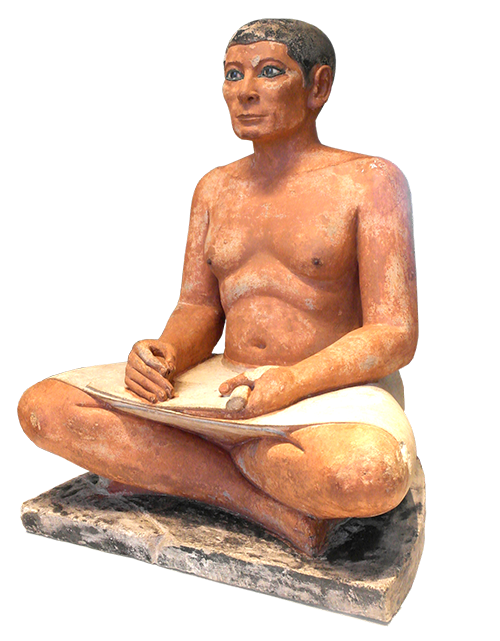
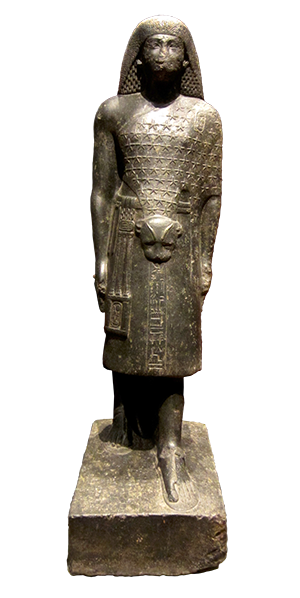
Other Egyptians also liked to be depicted with a papyrus scroll, the so-called scribe statues (Fig. 3). The usual explanation is that they were depicted this way to enhance their social status, but it is more likely that it was originally more of a symbol of wisdom. Being a scribe became an expression of being wise.
Ptahhotep was also a wise Egyptian. His insights inspired many people. Several of his writings have survived. Although we no longer have texts from his time, copies from a later period have been found. His wisdom texts were repeatedly copied.
These people were the teachers of Egypt. They selflessly used their wisdom and talents for the benefit of all people.
Temple schools
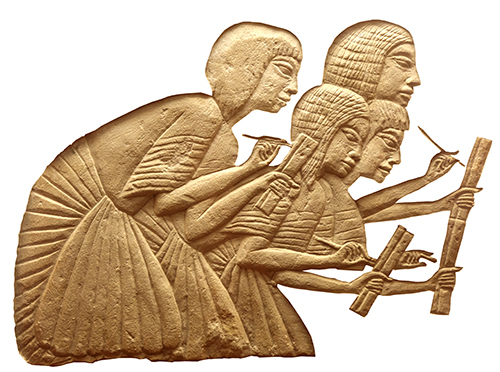
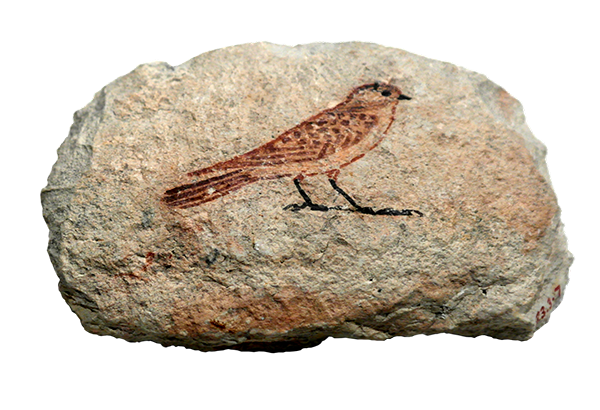
Education was provided in the Per Ankh, the house of life. This was located on the temple sites. Temples, unlike our time, were centers for science, religion, and art. Texts from all branches of science, such as astronomy, mathematics, history, medicine, and literature, were studied there. Young Egyptians could also learn hieroglyphs. They practiced on limestone fragments or pottery shards. One of the school texts often used for practice is addressed to Thoth. The text states that one can find the wisdom of Thoth by becoming silent and not being distracted by turbulent thoughts and turbulent emotions. When one then turns inward, this source of wisdom opens up. [2]
To a large extent, wisdom texts, books of the dead and other mythological texts were studied in the Per Ankh.
Disguised Wisdom
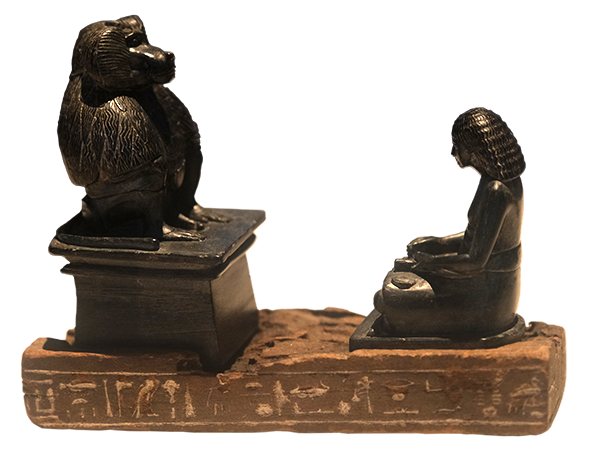
Wisdom texts are about justice, how to treat others, and which character traits are worth developing. They address the ethical side of life. These texts are always written in clear words. Everyone can understand them. But there was also another kind of knowledge, a deeper knowledge, knowledge hidden in myths and symbols.
But why did the Egyptians shroud part of their knowledge in symbolism? Why don’t they express everything in clear, concrete words? Partly, this has to do with the fact that some ideas are difficult to express. For example, no one can depict an invisible, boundless field of living energy, of infinite consciousness. You can’t describe it well either. This can only be expressed through symbols.
Another reason is to appeal not only to the intellect, the analytical capacity, but to something that transcends it. The intention was to train intuition and develop the wisdom of the heart.
A third reason for using symbols is because language is very changeable. Within a few years, the meaning of a word can change. The text can become so incomprehensible or even acquire an opposite meaning that it no longer contains any wisdom. Symbols, on the other hand, are more resistant to this. Symbols and myths are so strange that they are almost impossible to take literally. This automatically leads to a search for the deeper meaning.
Teaching Materials
Symbols conceal their meaning. At the same time, they reveal their content. Symbols contain multiple layers. Therefore, they invite us to look ever deeper, to discover new layers of meaning. This way, we could gradually explore the hidden mysteries of life.
Not only do symbols contain multiple layers, but the Egyptians also used multiple symbols for the same idea. For example, they had dozens of symbols for the sun god alone, ranging from a round disk, a falcon, a child, a goose, a beetle, a heron, a ram, a fish, a snake, and many other representations. This allowed us to constantly look at things in different ways and remain open to the deeper ideas behind them, without becoming entangled in the outward form. Symbols encourage us to maintain an open mind and thus prevent the development of rigid and limited ideas. This playful and flexible approach provided the perfect breeding ground for intuition.
Egyptian sages incorporated these symbols into sculptures and jewelry, in architecture and paintings, and in myths. Many Egyptians could not read or write, but the myths were passed down. The teaching material from the Book of Thoth is hidden in stories that everyone knew and in images that everyone sees, but which we still don’t fully understand.
Secret Knowledge
Symbols also protect against misuse. Egyptian texts speak of secret knowledge, of knowledge “which the common folk do not yet know.” [3] Why weren’t ordinary people allowed to know this? What did the Egyptians actually understand by “ordinary people”? Did this refer to someone’s profession, social background, or social position? Did only people with social standing have access to this deeper knowledge?
Quite the opposite. The Egyptians applied the term “ordinary people” in mythical texts to character and developed consciousness, not to fame, wealth, or lineage. The Egyptians distinguished between “commoners,” “nobles,” and “sunfolk.” [4]
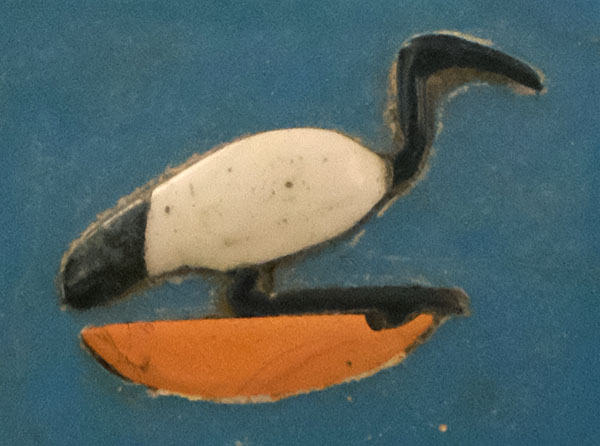
Lapwing
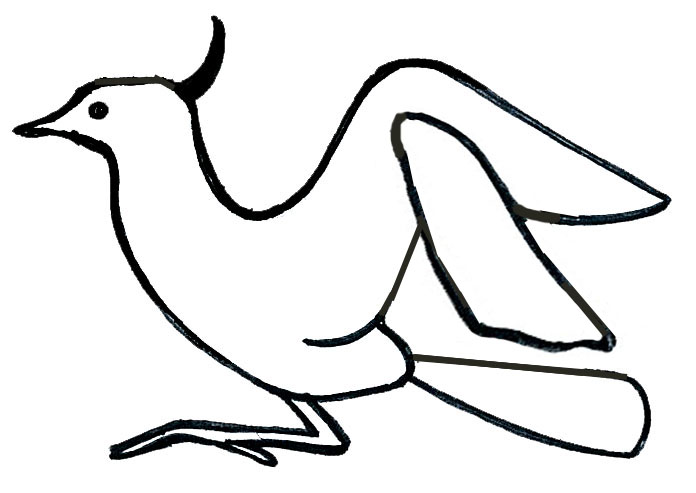
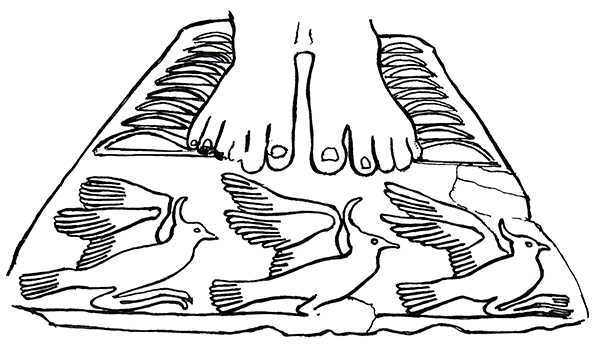
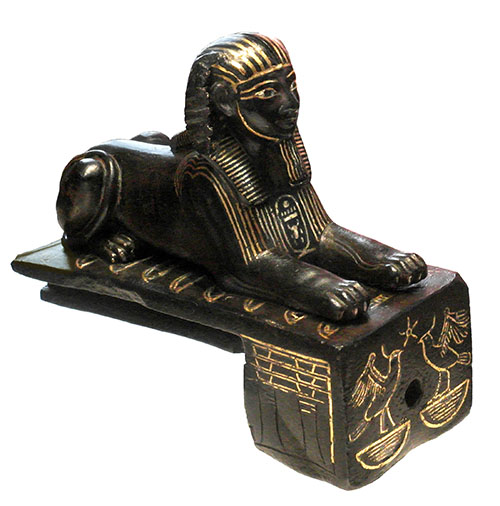
Ordinary people were symbolized by lapwings. The Egyptians never chose their symbols at random. By looking at the specific behavior of lapwings we get an idea of what the Egyptians understood by ordinary people. Lapwings crisscross the grasslands on their legs, bustling with activity. Occasionally they take flight briefly, but never for long and never high. In these fleeting moments, they fly in wild, angular patterns, always keeping their gaze fixed on the earth, because that is where their interest lies.
This makes these birds very suitable symbols for people primarily concerned with earthly, material matters. They have wings, but they do not yet soar to the high heavens. To further emphasize this symbolism, the Egyptians frequently depicted the lapwing with crossed wings, rendering it flightless (fig. 8).
Noble People
Egyptian myths indicate that average people don’t always act lovingly and justly. They are sometimes guided by their higher self and sometimes by their ego. They are sometimes altruistic and sometimes selfish.
Noble people are those who have developed a noble and pure character, people who are just, loving, generous, honest, and sincere. They support others and live according to the ethical laws of nature, according to Truth and Justice, in harmony with all living beings. These are people who listen to their heart, to their inner god. Noble people, like Imhotep, could very well come from a simple family.
“Sun people” most likely referred to people who have united even more deeply with their pure, inner core, with the sun god.
Mysteries
The idea that wise teachers passed on their deeper knowledge, under strict secrecy, only to people of beautiful, pure, and noble character, is found in many great cultures. In Greek times, it was common knowledge that initiates of the mysteries were not allowed to divulge their knowledge. Thus the most far-reaching mysteries remained hidden from those who might misuse them and were given to those who used them for the good of all.
Enlightened
All people were encouraged to be just and loving. Noble people could receive more education. They were helped to develop more rapidly, with the goal of better contributing to harmonious growth, peace, and well-being in the world, “so that strife may be banned from the people,” as Ptahhotep indicates. [6] This allowed them to better inspire their fellow human beings to focus on the heart of their being so they could draw from this source of wisdom themselves. Only when someone develops insight do they develop and can they make wiser decisions. Only when someone cultivates noble qualities do they create the harmony that can lead to lasting improvements. But although you have to build insights yourself, you can help each other do so.
Mythical texts, such as the Book of the Dead, reveal that the Egyptian aspires to become an Akh. He or she desires to reach the highest divine realms to gain insights and bring them back to humanity.
An Akh is a highly spiritual part of the human being. Someone who has identified with his Akh and has become an Akh is like Thoth. Akh comes from a word that means “enlightened.” At the same time, it also means “beneficent”—in the sense of good, wise, and loving—action. It means acting in such a way that it benefits everyone.
In image 1, Nefertari stands face to face with Thoth. Before her is a table with a water pot and a writing palette. Nefertari wants to be able to write with Thoth’s palette to perform Ma’at, says the accompanying text. She wants to be like Thoth. The ink she wants to write with is not ordinary ink, but consists of the living water that flows from Osiris, the text continues. [7] In other words: she wants to inspire with the wisdom that flows from the inner god (Osiris). In this way she can better contribute to harmony, truth and justice (Ma’at) on earth.
The Promise
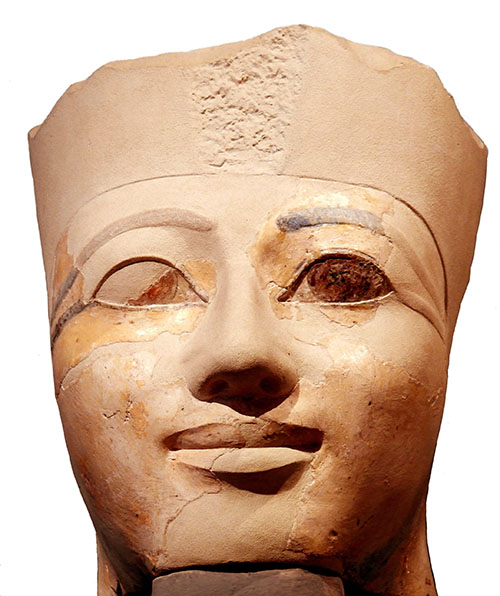
The same idea is found in the inscription on Hatshepsut’s obelisk. Hatshepsut recounts that she journeyed to “the secret of the beginning” and became acquainted with the beneficent power of Amun. She says she has not forgotten what Amun—her deepest core—told her. In everything she did, she consistently followed his instructions, which she “understood in her heart.” She “became Horus,” she says, “to protect common people and noble ones.” [8]
She evolved into Horus, her higher self, to be of even greater service to everyone, common people and noble ones alike; to dedicate herself “to the well-being of all.” [9]
Recognition
“The wise is a (school)) to the nobles,” it says in the wisdom text for Merikare. [10] But how do you recognize a wise teacher? You can only recognize something if you have already developed some of it yourself. If you have already developed some wisdom and noble characteristics, then you can also recognize these in others.
You recognize the tree by its fruit. Ptahhotep says:
“The wise is known by his wisdom. The great by his good actions.” [11]
He himself is an example of a noble man:
“His heart matches his tongue. His lips are straight when he speaks. He has eyes that see. His ears are made to hear what will profit his son. Acting with truth he is free from falsehood.” [12]
Natural Teachers
Teachers are very natural. Wise teachers, Thoths, are still rare, but everyone is a teacher at their own level. We are each other’s teachers and each other’s students, and no one knows or can do everything. Ptahhotep says:
“Don’t be proud of your knowledge.
Consult the ignorant and the wise.
The limits of art are not reached.
No artist’s skills are perfect.
Good speech is more hidden than greenstone.
Yet may be found among the maids at the grindstones.” [13]
You do not have to wait to become like Thoth. There is always someone who needs your knowledge, your talents, and your insights.

Notes
[1] The Immortality of Writers. Papyrus Chester Beatty. IV. In: Lichtheim 1976 vol. II, 175-178.
[2] Prayer to Thoth. In: Lichtheim 1976 vol. II, 114.
[3] Book of the Dead 161, 162. En: The Immortality of Writers. Papyrus Chester Beatty. IV, in Lichtheim 1976 vol. II, 175-178.
[4] The Great Hymn to Osiris. In: Lichtheim 1976, vol. II, 84-86.
[5]The instruction of Ptahhotep. In: Lichtheim 1973 vol. I, 64.
[6] The instruction of Ptahhotep In: Lichtheim 1973 vol. I, 63.
[7] Tomb of Nefertari. And Book of the Dead 94.
[8] The instruction addressed to king Merikare. In: Lichtheim 1973 vol. I, 99.
[9] The instruction of Ptahhotep In: Lichtheim 1973 vol. I, 73.
[10] The instruction of Ptahhotep In: Lichtheim 1973 vol. I, 73.
[11] Obelisk inscriptions of queen Hatshepsut. In Lichtheim 1976, vol. II, 26, 27.
[12] Obelisk inscriptions of queen Hatshepsut. In Lichtheim 1976, vol. II, 26, 27, 29.
[13] The instruction of Ptahhotep In: Lichtheim 1973 vol. I, 63.
This article is an adaptation of an article that appeared in Bresmagazine 352 july/august 2025 and on the book het Mooie Westen, mythen en symbolen in Egypte (2019).
Copyright text and photos: Corina Zuiderduin