Ptahhotep and the art of listening
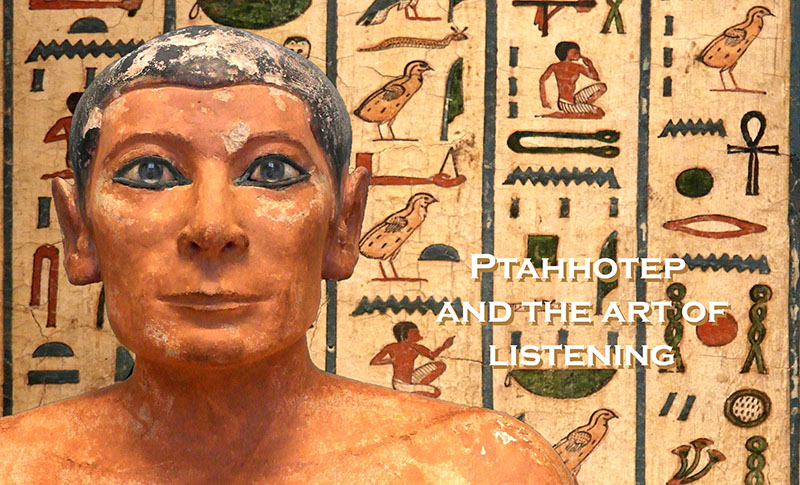
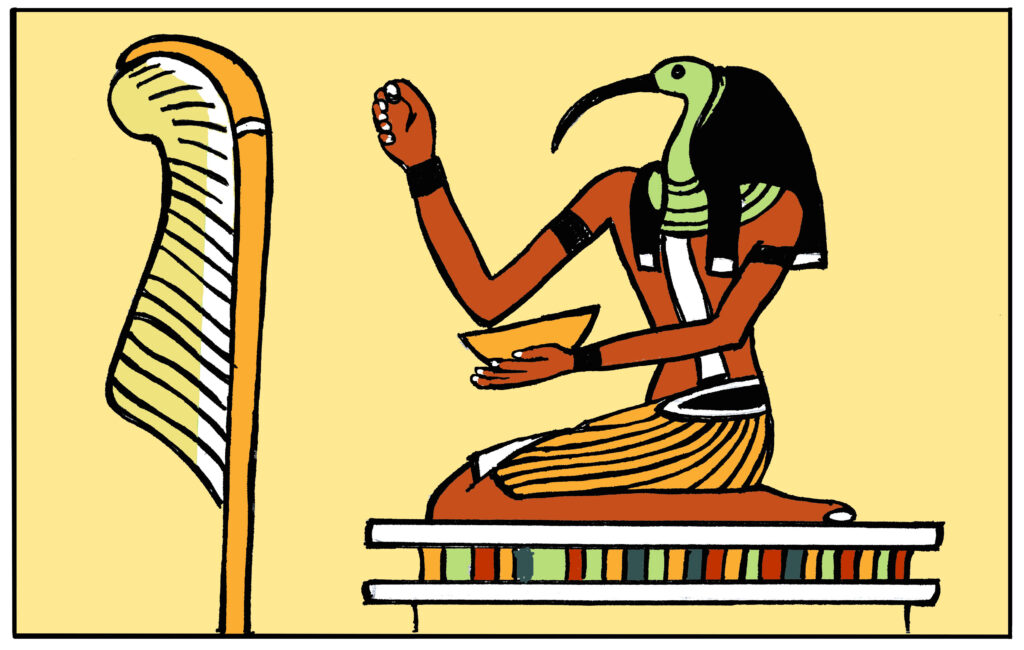
Egypt. Land of magnificent pyramids and countless art treasures. In antiquity, it was known as the cradle of wisdom. Thoth, the god of wisdom, is said to have bestowed his knowledge upon the Egyptians, as well as writing. Yet, the wisdom of Thoth has nothing to do with intellectual book knowledge. The wisdom of Thoth means wisdom of the heart. Anyone could develop this wisdom. The only thing you need, according to Ptahhotep, is the ability to listen.
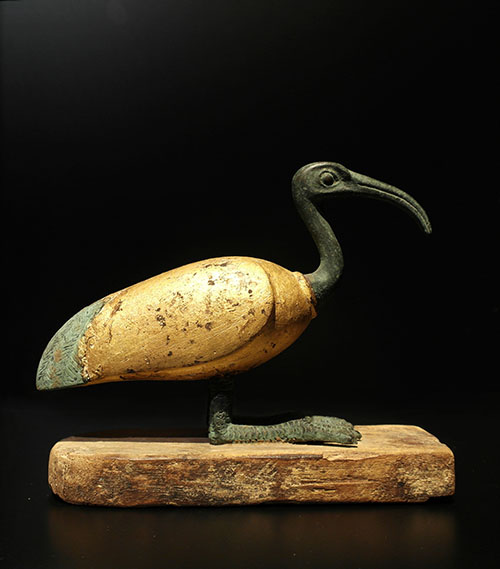
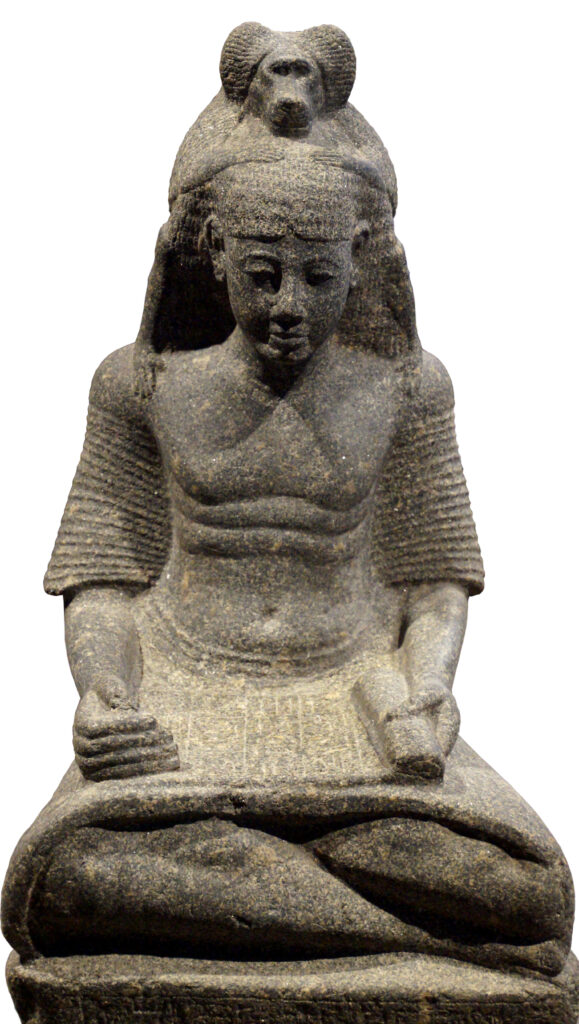
Thoth and the Egyptian scribes
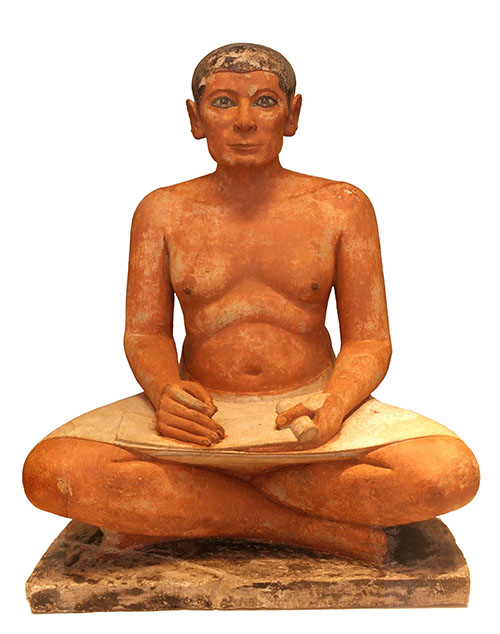
Thoth was seen as the guide for scribes, for great Sages like Ptahhotep. Ptahhotep was beloved, not only for his wisdom, but especially because he placed his insights and talents at the service of his fellow men. For centuries, like other Sages, he remained the inspiring example of the land.
Ptahhotep wrote one of the most beautiful wisdom texts known to us. Although thousands of years old, his words retain their meaning, even today. The text has been preserved in four copies dating from the time after Ptahhotep. Ptahhotep himself lived in the Fifth Dynasty, ca. 2400 BC.

Listening
According to Ptahhotep, listening is one of the most important qualities you can develop. Ptahhotep devotes nearly a hundred lines of verse to it. According to him, a good upbringing consisted of a father teaching his son to listen. Now you might think that by this he meant that a child should do what his father says, but that is not what was meant. A good upbringing meant that a father taught his children how to listen to their own hearts, how to attune themselves to their deepest essence.
In Egypt, the heart is the source of divine inspiration. It is the seat of love and wisdom. According to the Egyptians, love and wisdom always go together. When you want to help someone lovingly, you also need insight into how best to do this. Acting lovingly is acting wisely, and vice versa. Wisdom is insight into how to act lovingly—with compassion. The language of the Egyptians also shows this. Mer-ib and sem-ib both mean compassion. Ib is the Egyptian word for ‘heart’. Mer means ‘love’ and Sem ‘wisdom’.
The wisdom of Thoth is also closely intertwined with Maät, with cosmic harmony. It was Thoth who wrote down the laws of Maät. What are these laws of Maät?

The Laws of Maat
Maat was the most important concept in ancient Egypt. Everyone had to live and act according to Maat. Maat represents cosmic harmony. It also signifies truth and justice. According to the Egyptians, all of nature consists of living beings that all work together. Not only humans, animals, and plants are living beings, but stars, planets, and minerals are too. The matter from which the mountains and the land are composed is also life. Matter is not dead. According to the Egyptians, there is nothing that does not live. All these beings originate from the same infinite Life. Consequently, they are one in their deepest core. There is, however, a difference in development among all these beings. There are beings that are more developed and there are beings that are less developed. All these living beings, no matter how small or large, are on their way to developing ever further. They can only do this collectively, with one another.
The deeper part of man, his heart, realizes this unity and inner connectedness with all beings. This part acts by nature according to this harmony, according to Maat. It is the part within man that is sincere, honest, and loving. Wisdom and insight are also to be found in this part, just like the conscience that is also part of it.
Guide
According to the Egyptians, the heart is a good guide in life. Whoever listens to it is naturally loved by people. People prosper when they act according to the cosmic order of nature.
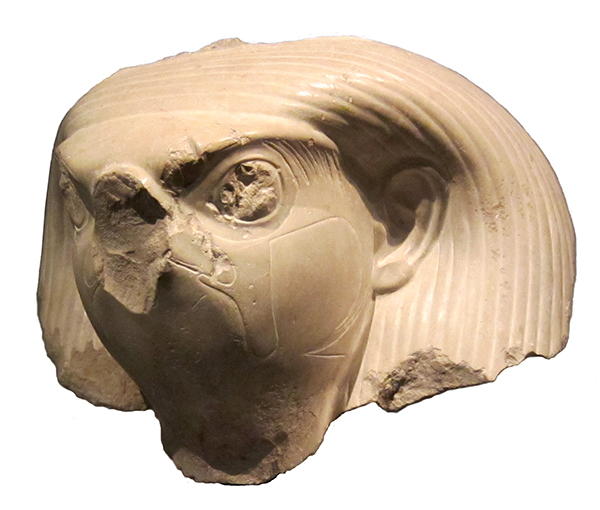
Someone who does not listen was called a ‘deaf person’. Deafness in Egypt had nothing to do with physical deafness, but ‘deaf’ meant being deaf to Ma’at. A deaf person is someone who is focused on his ego and therefore does not hear the voice of the sun god. At the same time, he do not hear his fellow human beings either. A deaf person shuts himself off from both his inner god and his fellow human beings. Ptahhotep describes both someone who listens and someone who does not listen with the following words:
‘One regarded as a hearer, this son excels, his deeds stand out, while failure follows the one who hears not.
(…)
The fool who does not hear can do nothing at all. He sees knowledge in ignorance, usefulness in harmfulness. He does all that one detest and is blamed for it every day.
He lives on that which makes one dies. His food is distortion of speech.
(…)
A son who hears is a follower of Horus. It goes well with him when he has heard.’[1]
Teacher and Student
According to the Egyptians, all wisdom and insight is present within man. It only needs to be awakened. Thus, the Egyptian Intef says: “. ‘I am a knower who taught himself knowledge, one who ponders Maät in his heart.’
People could be helped to further broaden their insights. Studying texts from the past could be a tool in this regard. But true wisdom comes from within. Words, written or spoken, can help awaken these insights.
A wise man inspired his disciple. Ptahhotep relates this:
‘May this servant be ordered to make a ‘staff of old age’ (a successor),
So as to tell him the words of those who heard, the ways of the ancestors, who have listened to the gods.
May such be done for you, so that strife may be banned from the people,
(…)
Instruct him then in the sayings of the past,
May he become a model for the children of the Great.
May the obedience enter him and the devotion of him who speaks to him. No one is born wise.’[2]
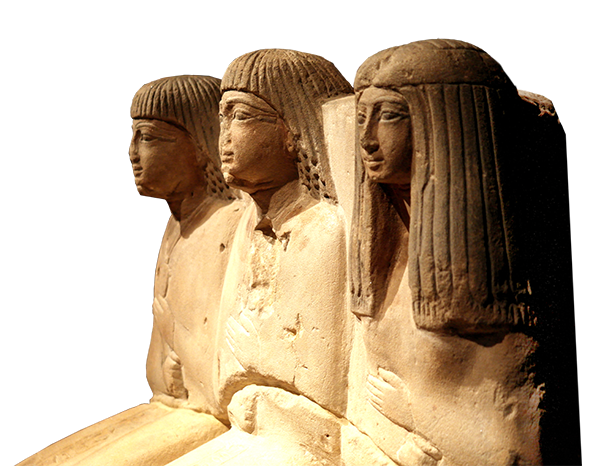
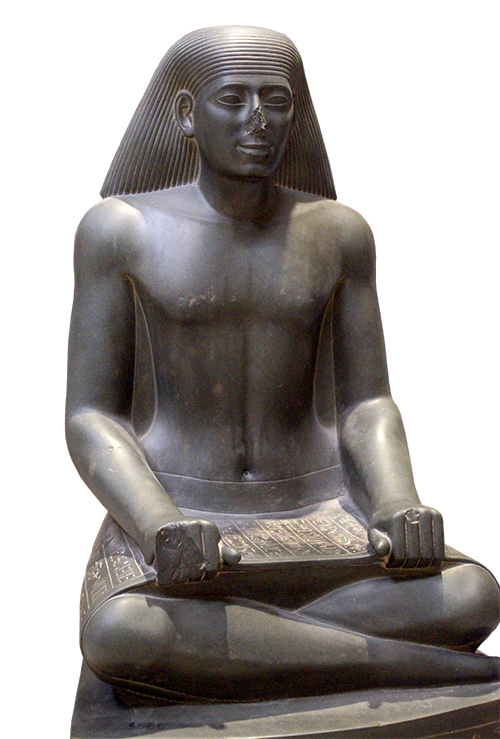
Ptahhotep indicates that he is part of a line of sages that goes back to ancient times, to the ‘ancestors who heard the gods’. In turn, he passes on his insights to those who will succeed him. Ptahhotep also mentions the reason why people are helped to further develop wisdom: to eliminate conflict between and within people, to contribute to harmony and peace with the acquired insights and developed qualities, and to encourage others, in turn, to listen to their own hearts. But most importantly, it is to be an example.
‘If a good example is set by the one who leads, it will be beneficent forever.
His wisdom being for all times.’[3]
Good listener
A wise person is someone who allows the qualities of his heart to be born within himself. Ptahhotep speaks about this:
‘The wise feeds his ba (soul) with what endures by establishing beauty and goodness in it so that it is happy with him on earth.’[4]
Wisdom is, according to Ptahhotep, always relative. One acts according to Ma’at when he acts according to his own highest insights and to the best of his ability. According to Ptahhotep, there are no limits to discovering wisdom and truth. No one is perfect and knows everything.
Someone who listens also understands the art of recognizing from people’s words exactly those words that are true, that contain wisdom.
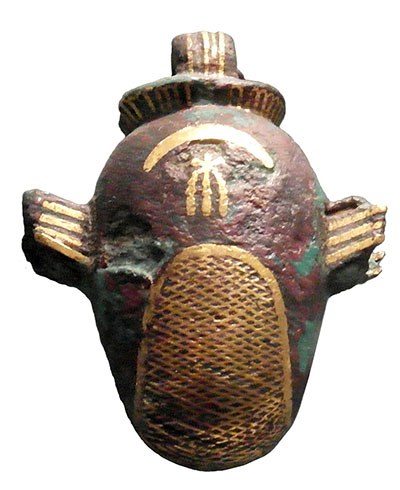
Fig. 9a Amulet of a heart. It is remarkable that the hieroglyph for ‘birth’ appears on this heart. Louvre, Paris. (photo: Corina Zuiderduin)
Connecting
Listening also meant connecting with others. According to the Egyptians, it was inherent in nature that beings support one another. Understanding, friendship, and listening to each other attentively were therefore also important.
According to Ptahhotep, listening is closely connected to speaking. Knowing when and how to say something is a skill. You do not always have to say something; sometimes it is sufficient, or in some cases perhaps better, to simply be an example.
Above all, listening means tuning into your heart that speaks without words. According to Ptahhotep, listening is connected with love. ‘Love leads to the attainment of perfection, and that arises when listening and speaking are well,’ he says. And speaking is well, Ptahhotep continues, when listening is well. “Hearing is better than all else,”[6]
Whoever listens forms a channel of inspiration from his heart for his fellow human beings. Perhaps it is no coincidence that the hieroglyph for the word ‘channel’ is the same as that for ‘love’.
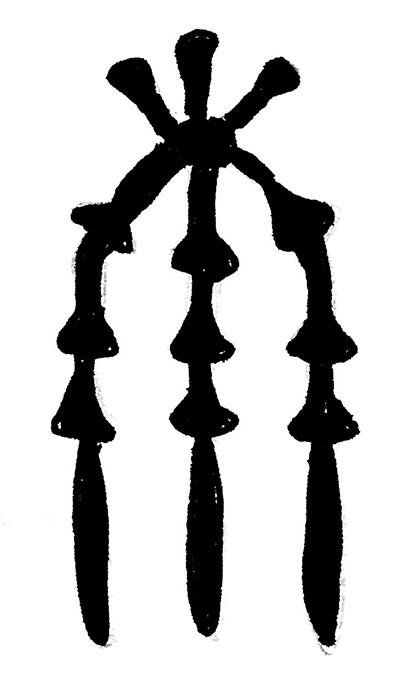
Fig. 9b Hieroglyph for ‘birth’ or ‘to be born’.

Notes
Notes 1 through 6:
Wisdom text of Ptahhotep. From: Lichtheim, M., Ancient Egyptian Literature, vol. 1, London 1973, 61-80.
This article is an adaptation of the article De kunst van het luisteren which appeared in Bres-magazine 325, December 2020/January 2021, and the book Het Mooie Westen, Mythen en Symbolen in Egypte.
Copyright text and images: Corina Zuiderduin.